

About this place
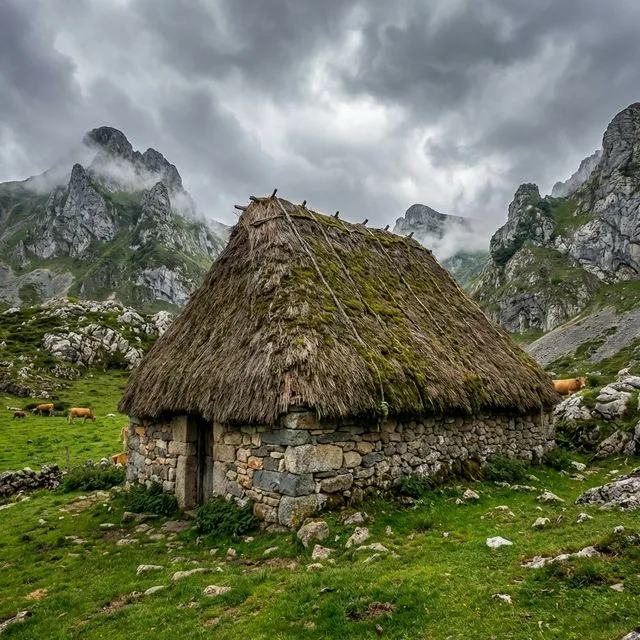
Groups of stone huts with thatched roofs where shepherds spent the summer months.
The Architecture of Survival
If something defines the humanized landscape of Somiedo, it is its brañas. These sets of stone cabins with vegetal roofs (teitos) spread throughout the high pasture areas are the symbol of the seasonal transhumance of the alzada vaqueiros and local ranchers.
What is a Braña?
A braña is the summer pasture area. The shepherds came up with their livestock from the valley towns (or from the coast, in the case of the vaqueiros) to take advantage of the fresh grass from the heights during the warm months. There they lived in these cabins, simple but effective against the cold and rain.
Teitos: Living Roofs
The ground cover (teito) is normally made with broom (piorno) or rye. It is an excellent thermal insulator, keeping the interior cool in summer and warm in winter. Maintaining a teito is an art (“teitar”) that is unfortunately being lost.
The Essentials
- Braña de La Pornacal: Possibly the most famous and best preserved. A spectacular set of 32 teitos located in the Pigüeña valley. Access is easy from Villar de Vildas.
- Braña de Mumian: Located on the slope of Coto de Buenamadre. It stands out for its rectangular teitos (“cabanos”) and its impressive views of the valley. Its meadows are of incredible botanical wealth.
- Braña de Sousas: In the Lake valley. Here you will find the “corros”, circular stone constructions with a false dome, much more primitive and ancient than the rectangular teitos.
Respect
These cabins are private property and many are still in use. Do not enter them without permission, do not climb the walls and respect the environment. They are an open-air museum that we must all take care of.
Guided experiences
Guided tours
Actividades gestionadas por Civitatis · Cancelación gratuita hasta 24h antes
For your visit
Recommended gear



Affiliate links — we earn from qualifying purchases.
Keep exploring


