

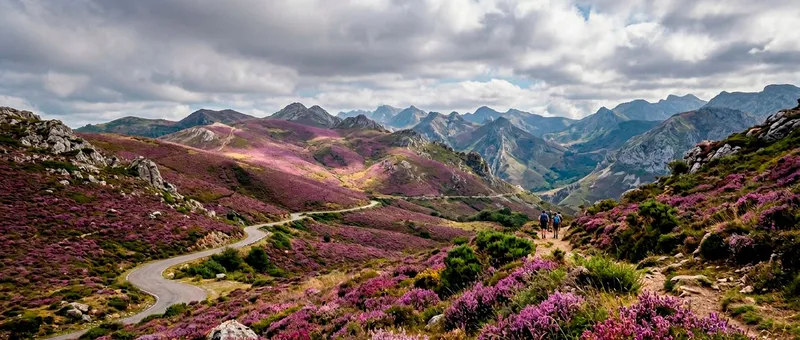
The plant that conquers the high mountains
Above the treeline, where wind and cold make it difficult for trees to grow, heather moors become one of the dominant plant landscapes of the mountain passes and brañas in Asturian natural parks such as Somiedo. Heather (genera Erica and Calluna) is a low, woody and extraordinarily hardy shrub, able to thrive in poor, acidic soils where few other plants survive.
A mantle that changes colour in summer
In late summer, usually between August and September, heather moors reach their most spectacular moment: the slopes of the mountain passes become covered in a dense mantle of small flowers in pink and purple tones, a very recognisable contrast against the green of the meadows and the grey of the nearby rocky outcrops.
This mountain scrubland typically coexists with other low-growing species adapted to the same harsh conditions of altitude, wind and poor soil, forming together a plant mosaic typical of the high traditional grazing areas known as brañas.
A plant steeped in tradition
Heather is not just a landscape feature: it has a historic role in rural Asturian culture. Its flexible, sturdy branches have traditionally been used to make rustic brooms, and its flowers are highly valued by bees, forming the basis of the well-known heather honey, a typical mountain product with an intense, dark flavour very different from common floral honey.
Because it covers the ground so densely, heather moors also play an important role in holding the substrate together on exposed slopes, helping to slow erosion in areas where trees cannot become established.
When and where to enjoy them
The best time to see heather moors at their floral peak is late summer, when routes climbing to the mountain passes and brañas, such as those crossing the upper areas of Somiedo, offer views of entire hillsides tinted purple. It’s a good time to combine a hiking route with the chance to observe one of the most characteristic — and least known — plant landscapes of the high Asturian mountains.

