

About the species
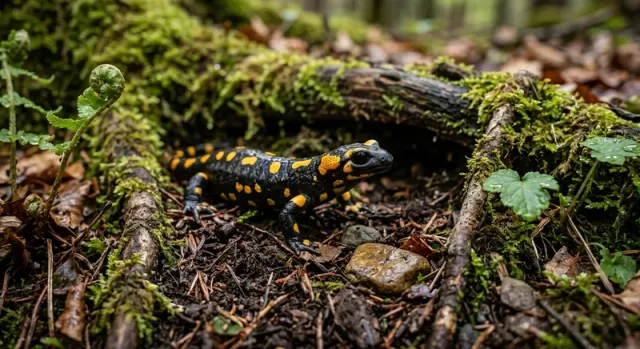
The fire salamander is the most striking amphibian in the Asturian parks. Its unmistakable black and yellow livery is no mere decoration: it is a warning. The skin of this animal secretes toxins that make it unpalatable or dangerous to most predators.
The amphibian of the rain
The fire salamander (Salamandra salamandra) is one of the most unmistakable animals in the Cantabrian forests. Its striking black and yellow pattern — which varies between individuals like a fingerprint — makes it unique among Asturian wildlife.
The toxin that protects
The salamander’s skin produces samandarine, a neurotoxic alkaloid that is irritating or even toxic to most predators. The intense yellow colour acts as an aposematic signal, warning potential attackers that this is not an appetising meal. This defence mechanism allows it to move about with relative impunity even during daylight hours.
A peculiar amphibian: ovoviviparous
Unlike most amphibians, the fire salamander does not lay eggs in water. Females are ovoviviparous: they retain the eggs inside their body until they hatch, then give birth directly to aquatic larvae in streams and springs. In some northern Iberian populations they go even further, giving birth to fully metamorphosed terrestrial juveniles.
Habits and behaviour
The fire salamander is primarily nocturnal, though it may be active during the day in wet or overcast conditions. It spends most of its time hidden beneath rocks, rotting logs or tree roots, emerging to hunt invertebrates. In winter it hibernates in similar shelters, alone or in groups.
When and where to find it
The best conditions are warm rainy nights between March and October, particularly near streams in beech and oak forests. The forest paths of Redes and Ponga are excellent for spotting them after rain. Walking slowly with a torch along damp woodland tracks at night is the surest way to see this spectacular amphibian.
Sightings
Where to spot it


Guided experiences
Guided tours
Actividades gestionadas por Civitatis · Cancelación gratuita hasta 24h antes