

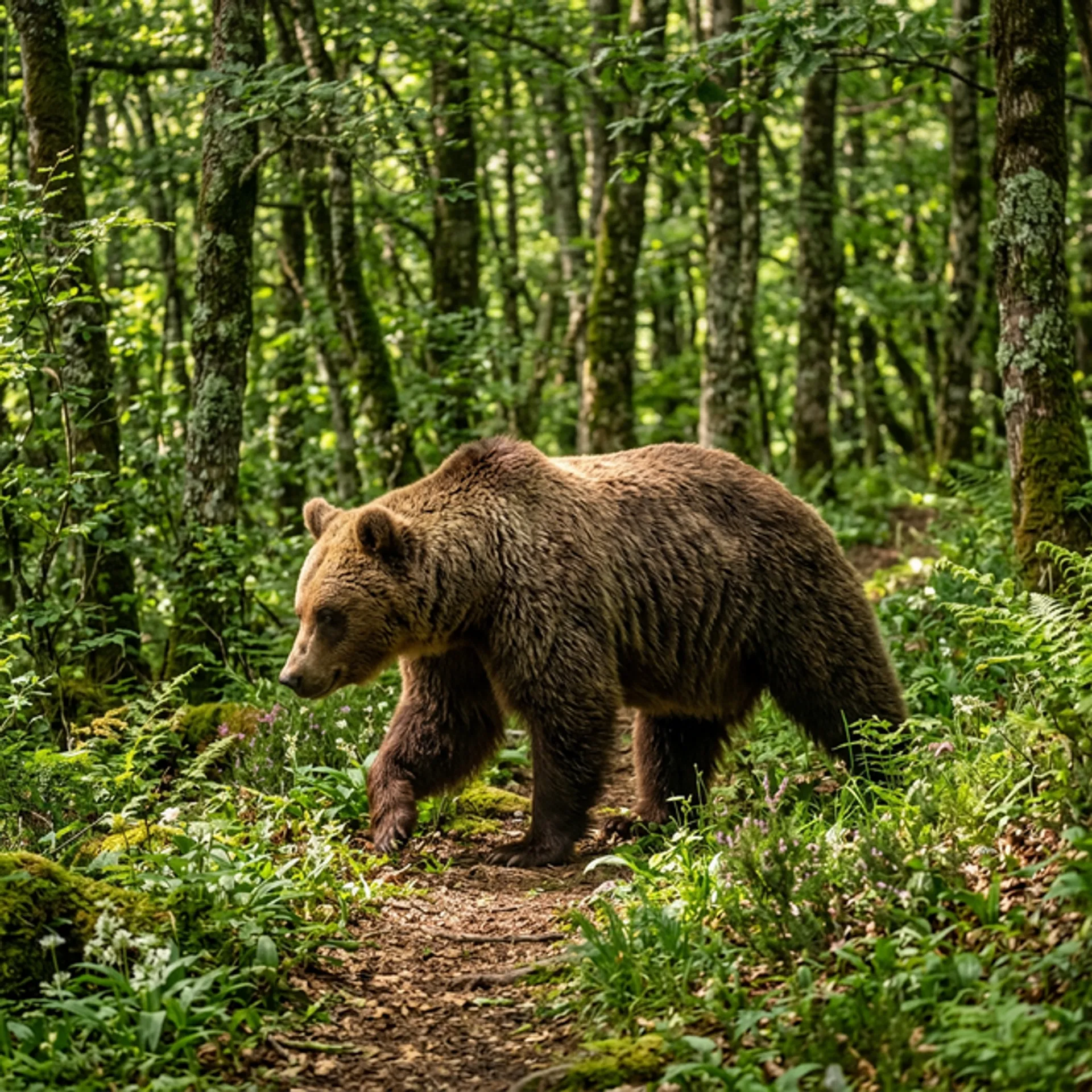
The Cantabrian Brown Bear: The Great Survivor of Our Mountains
Asturias’ Giant and Somiedo’s Jewel
Deep within the vast expanse of the deciduous forests of the spectacular Asturian mountains, exactly where the persistent mist dances in perfect rhythm to the howling wind, lives the true, undisputed king of the Northern Natural Parks: the magnificent Cantabrian brown bear (Ursus arctos pyrenaicus).
Its very presence strongly evokes the wildest, noblest, and most primitive side of the extensive mountain range. With its incredibly dense, warm coat that varies in shade from pale blond to darkest chestnut brown, this fascinating omnivore is an ecological treasure of literally incalculable value. Today, it proudly represents one of the most successful, hopeful stories of wildlife recovery and genuine environmental awareness in contemporary Europe.
Where These Natural Jewels Live
The Cantabrian brown bear is primarily distributed along two distinct sub-populations. In stunning Asturias, it is thrilling to find signs and traces of their powerful presence throughout the rugged and breathtaking Somiedo Natural Park (the primary location where the main, stable Cantabrian population of the species is currently concentrated), and the adjoining Fuentes del Narcea, Degaña, and Ibias Natural Park.
The enormous forest masses of thick beeches, centuries-old oaks, and generous chestnut trees, safely located far away from human activity, provide the plantigrade with ample food, vital natural shelter, and the absolute peace needed to successfully thrive.
The Fascinating Cycle of Ursine Life
The life of a wild Cantabrian bear changes drastically, in a beautiful, ancient dance synchronized with the natural elements, throughout each season:
- Spring: The tiny, exceedingly playful cubs, born deep underground during the harsh winter hibernation, bravely begin to emerge from their rock dens to eagerly discover the vast outside world under the watchful gaze of their fiercely devoted mothers.
- Summer: In their fundamentally vegetarian daily diet, sweet and highly refreshing wild fruits now dominate. Juicy blueberries or the tart buckthorn berries are abundantly present in the higher forested areas of the steep mountains.
- Autumn: Driven exclusively by survival instincts, the bears enter a frantic, focused state of deep hyperphagia. They continually consume vast, highly caloric quantities of nutritious fallen chestnuts and fatty acorns, accumulating enormous reserves of thick subcutaneous fat to secure their massive bodies against the incoming freezing winter.
- Winter: Driven by cold and snow, it’s finally time to meticulously prepare a dark, highly isolated cave in the solid rock. It is there they will initiate their vital period of deep winter sleep—the fascinating act of hibernation.
Responsible and Ethical Observation
Fortunately, numerous local, highly expert companies dedicated to responsible ecotourism enthusiastically offer formidable, highly educational bear watching interpretation routes.
It should be strongly noted that observation is never, under any circumstance, 100% guaranteed. This unforgettable experience must always be responsibly conducted with thoroughly accredited, local guides offering incredibly powerful terrestrial spotting scopes. All of this specialized equipment is consistently used at a considerable, highly prudent, and safe distance, guaranteeing that these magnificent animals do entirely not feel in any way bothered or noticeably disturbed during their peaceful life in complete freedom.
Are you truly ready and willing to enthusiastically come out, bundle up warmly, and respectfully try your wild luck? The immense, vividly green Cantabrian meadows and soaring mountains eagerly await you to live this unmatched adventure!