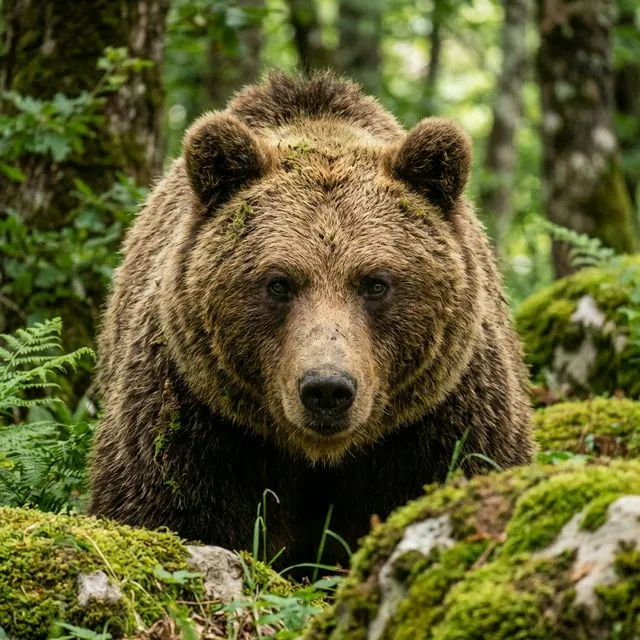
About the species
The Cantabrian brown bear is the great symbol of Asturias's wild fauna. With a population of around 350 individuals divided into two nuclei — western and eastern — its recovery is one of the greatest conservation success stories of Iberian wildlife.
The king of the Cantabrian mountains
The brown bear (Ursus arctos) is the largest land mammal on the Iberian Peninsula. The Cantabrian subpopulation, genetically distinct from other European bears, lives exclusively in the Cantabrian Mountains and is one of the most threatened carnivores on the continent.
Historical recovery
In the mid-20th century, the Cantabrian population dropped to fewer than 50 individuals, facing real extinction risk. Thanks to decades of legal protection, anti-poaching efforts, and habitat conservation programmes, the population has grown to over 350 bears today.
When and where to spot them
- Spring (April–June): The best season. Bears descend to valleys in search of fresh grass. It is possible to see mothers with cubs from the Somiedo viewpoints.
- Summer (July–August): They move to higher elevations to eat bilberries, blackberries and hazelnuts.
- Autumn (September–October): Hyperphagia before hibernation. Bears remain active searching for acorns and wild fruit.
Observation tips
- Use binoculars or a spotting scope with at least 20× magnification.
- Always observe from designated viewpoints and keep silent.
- Never approach or attempt to attract them with food.
- Book a guided visit with certified local wildlife guides.
Sightings
Where to spot it


Guided experiences
Guided tours
Actividades gestionadas por Civitatis · Cancelación gratuita hasta 24h antes
For your visit
Recommended gear

Affiliate links — we earn from qualifying purchases.
Keep exploring