About the species
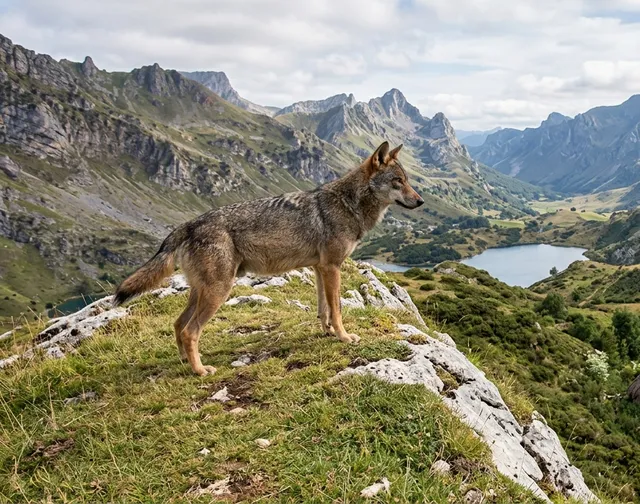
The Iberian wolf is the most feared and most misunderstood predator in the Asturian parks. Its presence in the Cantabrian Mountains is fundamental for ecological balance: it controls ungulate populations and prevents overpopulation of deer and wild boar.
The eternal controversial of the Asturian mountains
The Iberian wolf (Canis lupus signatus) is perhaps the most polarising animal in Asturian fauna. Revered by ecologists, feared by farmers, and admired by photographers, its presence in the Cantabrian Mountains sparks passionate debates mixing science, tradition and rural economy.
Characteristics
The Iberian subspecies is distinguished from the common European wolf by being somewhat more slender and by presenting characteristic markings: a dark patch on the front of the carpus (wrist) and dark stripes on the tail. It weighs between 25 and 40 kg, with males always larger than females.
Social structure
It lives in family packs of 4 to 10 individuals, led by the dominant (alpha) pair which is the only one that reproduces. The pack hunts cooperatively and defends a fixed territory for years.
The ecological role
As a top predator, the wolf regulates populations of deer, roe deer and wild boar, preventing overpopulation and associated damage to crops and forests. In ecosystems where it has been reintroduced, such as Yellowstone, its presence has triggered a “trophic cascade” with positive effects on vegetation and rivers.
Conflict with livestock farming
The wolf attacks livestock — mainly sheep and free-range cattle — generating a real conflict with mountain farmers. Regional compensation systems and preventive measures (Mastín dogs, electric shepherds) attempt to mitigate this conflict with uneven success.
Sightings
Where to spot it


For your visit
Recommended gear

Affiliate links — we earn from qualifying purchases.
Keep exploring