About the species
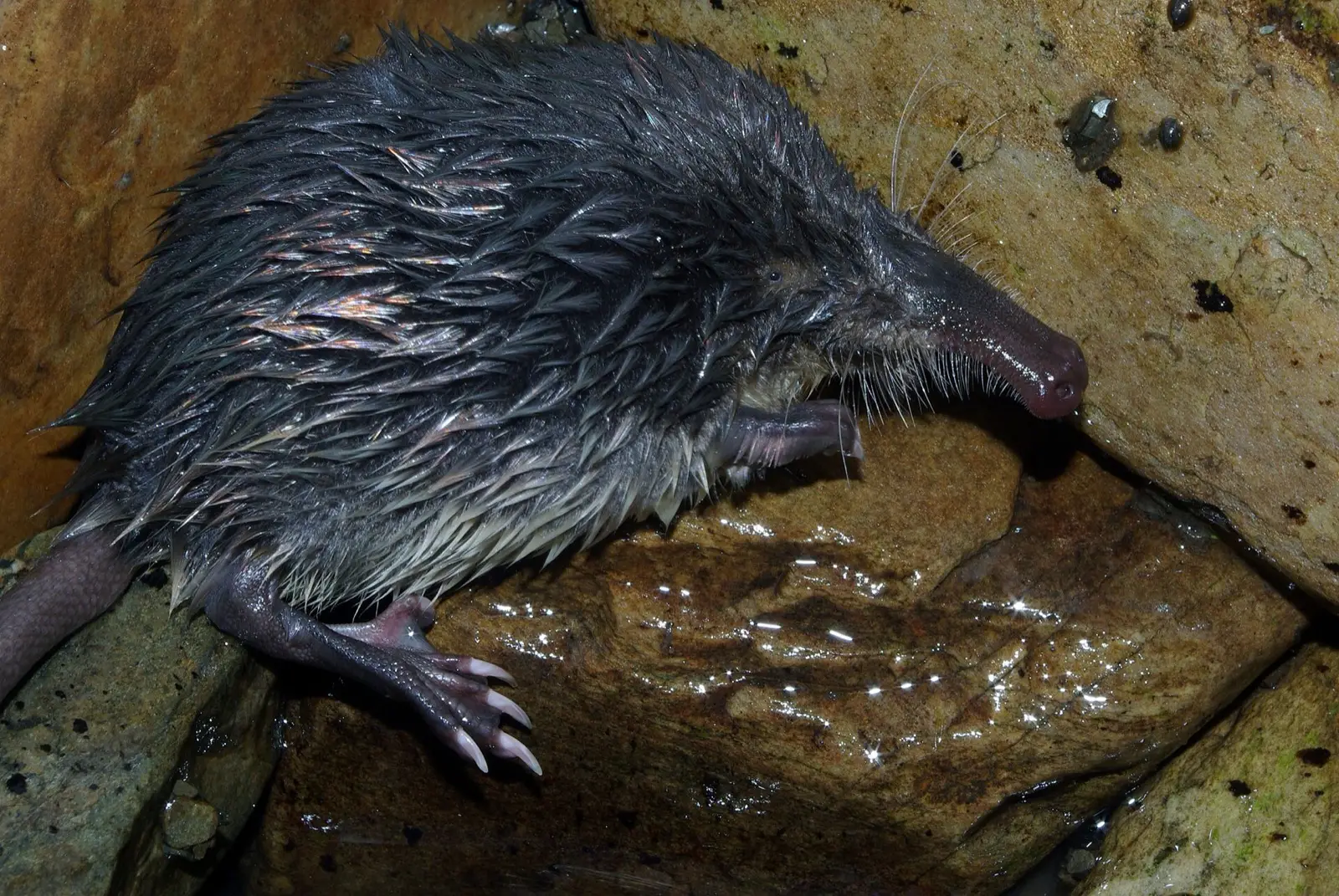
The Iberian desman is one of the least known and most threatened mammals in Europe. This semi-aquatic insectivore, endemic to the Iberian Peninsula and the Pyrenees, lives exclusively in clean, cold mountain rivers and streams. Its presence is an indicator of maximum ecological quality.
The secret inhabitant of Cantabrian rivers
The Iberian desman (Galemys pyrenaicus) is probably the least known mammal in Asturias’s fauna catalogue. Despite its uniqueness — it is an evolutionary relic of the Tertiary with no close relatives anywhere in the world — it barely appears in popular wildlife documentaries or guides.
A design for water
It measures 11 to 16 cm not counting the long prehensile tail. It has an elongated, mobile snout like a small trunk, which it uses to detect aquatic invertebrates on river beds. Its webbed hind feet and laterally compressed tail make it an efficient swimmer in fast currents.
Biology and behaviour
It is nocturnal and crepuscular in habit, extremely difficult to see in the wild. It feeds mainly on aquatic insect larvae (mayflies, stoneflies, caddisflies) and small crustaceans. It needs to consume a quantity of food equivalent to its own body weight every day.
Why it is threatened
- Water pollution: The desman is extraordinarily sensitive to any change in water quality.
- Flow alteration: Mini-hydro plants, diversions and dams fragment its habitat.
- American mink: An invasive species that competes with and preys upon the desman.
- Climate change: Warming of mountain rivers reduces available oxygen and food.
Sightings
Where to spot it


Guided experiences
Guided tours


Booked on GetYourGuide; each activity shows its cancellation policy.
Keep exploring