About the species
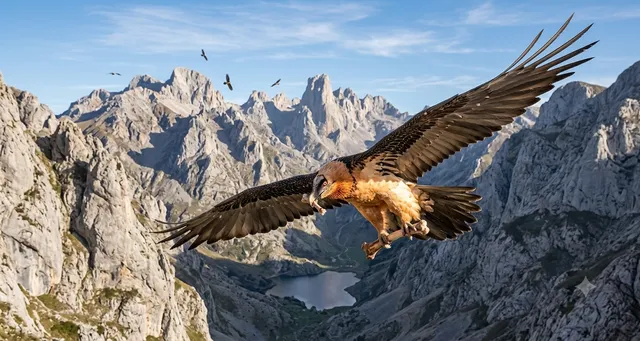
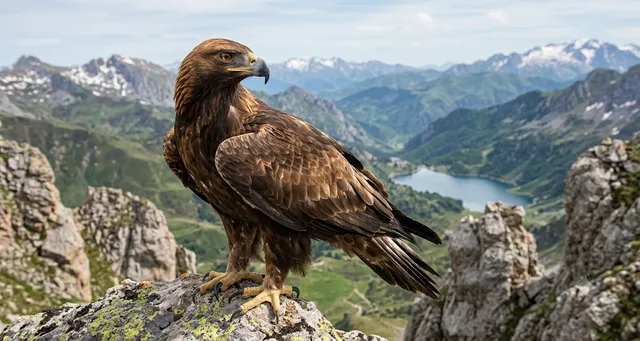
The raptor par excellence of the Cantabrian mountains. With a wingspan of up to 2.2 metres, the golden eagle is the largest diurnal bird of prey in the Asturian parks. Its circling flight over rocky cliffs is one of the most powerful images of Asturian nature.
The sovereign of the Cantabrian skies
The golden eagle (Aquila chrysaetos) is undoubtedly the most imposing and charismatic raptor of the Asturian mountains. Present across all continents of the Northern Hemisphere, this species finds optimal breeding habitat in Asturias’s natural parks.
Description
Adults show dark brown plumage with a golden nape — hence chrysaetos, “golden eagle”. Juveniles display white patches on wings and tail that gradually disappear with age. Wingspan can exceed 2.2 metres and weight ranges from 2.8 to 6.7 kg, with females considerably larger than males.
Nesting
The golden eagle is faithful to its nesting territory for decades. It builds nests — called eyries — on inaccessible rocky cliffs, enlarging and reinforcing them year after year until they can weigh several hundred kilograms. It lays 1–2 eggs between February and March; usually only one chick survives.
Hunting and diet
It is an opportunistic and generalist hunter: hares, rabbits, partridge, young foxes, and carrion from ungulates form the basis of its diet. Its most common hunting technique is low-level flight along hillsides, surprising unsuspecting prey.
Where to observe it
The best times are at dawn and dusk, when thermal currents carry it soaring over cliff faces. Recommended areas:
- Ubiñas: Around the Valdemuría Reservoir
- Redes: Gorge of the Aller river
- Somiedo: Cliffs above Lago del Valle
Sightings
Where to spot it


Guided experiences
Guided tours
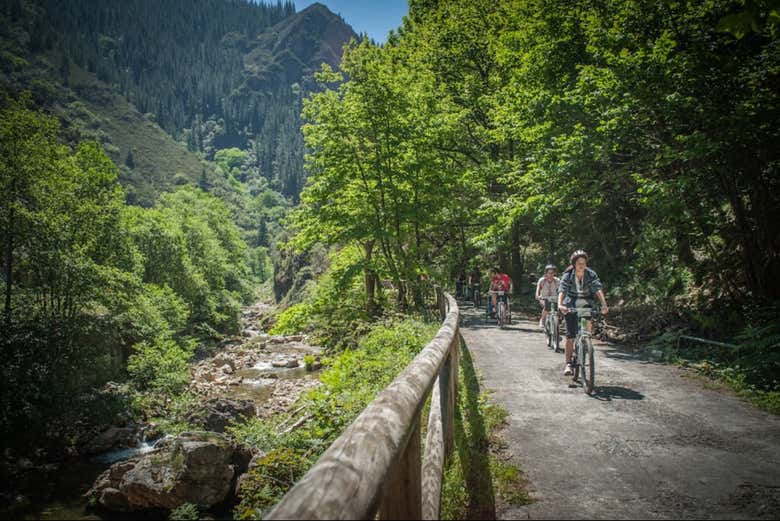
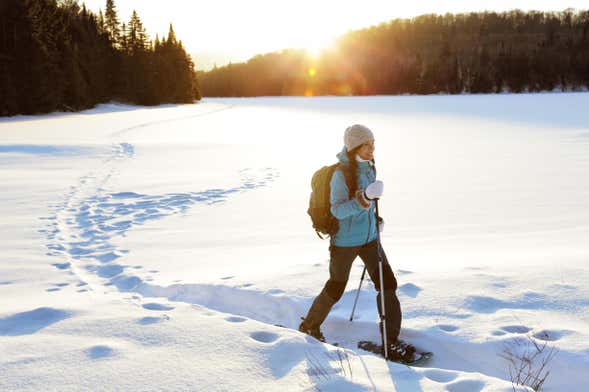
Actividades gestionadas por Civitatis · Cancelación gratuita hasta 24h antes
For your visit
Recommended gear

Affiliate links — we earn from qualifying purchases.
Keep exploring