About the species
The bearded vulture is the most singular bird of the Picos de Europa and one of the rarest in Europe. With a wingspan exceeding 2.7 metres, this mountain vulture feeds almost exclusively on bones, which it drops from height onto rocks to access the fatty marrow. After decades of persecution and poisoning, its reintroduction to the Cantabrian Mountains is one of the most ambitious conservation projects in Spain.
The bone-breaker
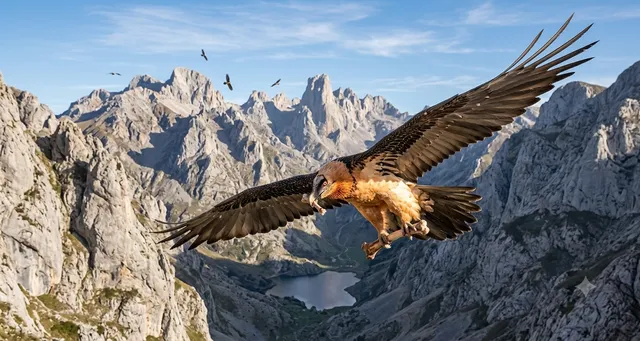
The bearded vulture (Gypaetus barbatus) is, without question, the most spectacular and most enigmatic bird of the Picos de Europa. Its common name in Spanish — “the one that breaks bones” — accurately describes its unique feeding technique: it collects bones from ungulate carcasses, flies them to a height of 50–80 metres and drops them onto flat rock slabs (called oseras) to crack them open and access the fatty marrow, which makes up 70–90% of its diet.
Physical features
It is the largest bird flying in the Cantabrian Mountains. With a wingspan that can exceed 2.7 metres and a weight of 5–7 kg, its silhouette in flight is unmistakable: long, narrow wings, a wedge-shaped tail and a small head with its characteristic black moustache. Adult plumage — not attained until 5–7 years of age — shows orange tones on the belly and head, the result of bathing in iron oxide-rich pools.
A story of extinction and return
The bearded vulture disappeared from the Cantabrian Mountains at the beginning of the 20th century as a result of direct persecution: for decades it was considered a predator of livestock and even children — a completely false legend that led to it being hunted to extinction in northern Spain.
The reintroduction programme in the Picos de Europa began in 2019, coordinated by the Bearded Vulture Conservation Foundation (FCQ) with the support of the Asturian government and the National Park. Several captive-bred and Pyrenean-origin birds were released, and since then regular sightings and some nesting attempts have been recorded.
Where and when to see it
The best vantage points in the Picos de Europa are:
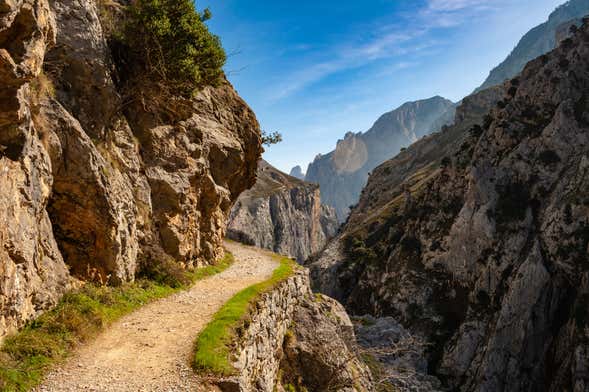
- Cares Canal and upper areas between Poncebos and Caín
- Central massif, particularly around Vega Urriellu
- Covadonga Lakes: occasional overflights above the western massif
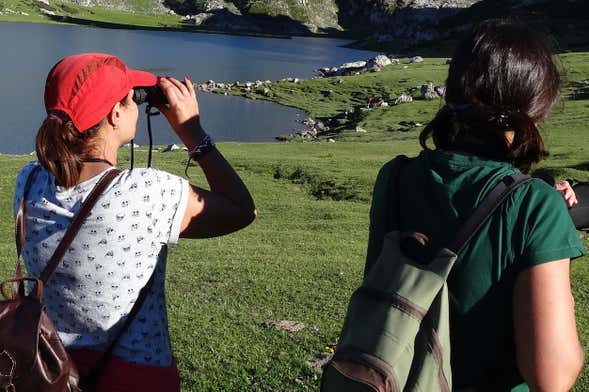
The best season is November to February, when adults are most active in flight and clear winter days allow you to watch them soaring above the cliffs for hours. A spotting scope or high-power binoculars are essential.
Conservation status
Listed as “Endangered” in the Spanish Catalogue of Threatened Species. The Pyrenean population — the only one to survive in Spain — numbers around 130 breeding pairs and is growing slowly. The Cantabrian reintroduction is one of the most closely followed wildlife recovery projects in Europe.
Sightings
Where to spot it

Guided experiences
Guided tours
Actividades gestionadas por Civitatis · Cancelación gratuita hasta 24h antes
For your visit
Recommended gear

Affiliate links — we earn from qualifying purchases.
Keep exploring