About the species
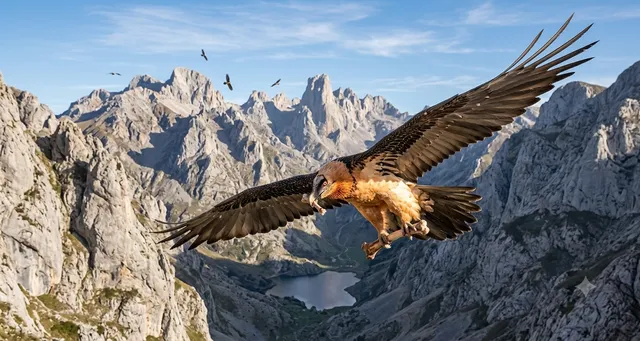
The Egyptian vulture is Europe's smallest vulture and one of the few animals in the world capable of using tools. Its bare yellow face, black-and-white plumage and distinctive wedge-shaped tail make it unmistakable in the skies above the Asturian parks.
The vulture that uses tools
The Egyptian vulture (Neophron percnopterus) is one of the most remarkable birds of the Cantabrian Range. Small, elegant and surprisingly intelligent, this vulture is known for an ability long thought unique to primates: the use of tools.
Avian intelligence
Egyptian vultures use stones to break open eggs — in Africa they target ostrich eggs, and in Europe they use similar techniques with other large eggs. This behaviour, scientifically documented and observed repeatedly, places the Egyptian vulture among the very few non-human animals capable of using objects as tools to obtain food.
A traveller between continents
The Egyptian vulture is a long-distance migratory species. Each autumn it leaves the Asturian parks and crosses the Strait of Gibraltar bound for sub-Saharan Africa, where it spends the winter. In spring it returns to the same breeding territories — sometimes to the very same cliff ledge used years before.
Conservation status
In Spain the Egyptian vulture is classified as Endangered. The main threats are illegal poisoning with baits set for other predators, collision with power lines, and disturbance at nesting cliffs. The Cantabrian populations are particularly vulnerable due to their small size.
The Picos de Europa: its Cantabrian stronghold
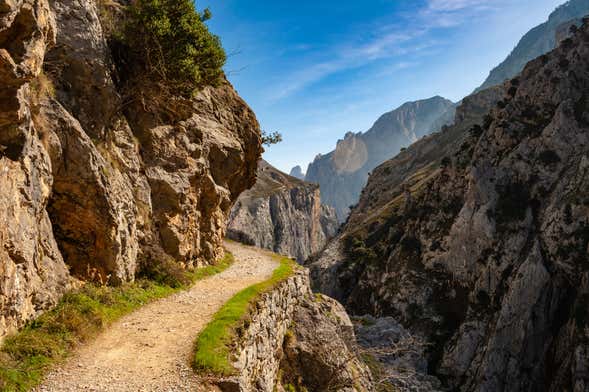
The spectacular limestone cliffs of the Picos de Europa National Park are the main Cantabrian refuge for the Egyptian vulture. The gorges of La Hermida and Cares are exceptional places to watch it soaring above rocky walls between May and August. The silhouette is unmistakable: white, with black wingtips and a wedge-shaped tail.
Sightings
Where to spot it


Guided experiences
Guided tours
Actividades gestionadas por Civitatis · Cancelación gratuita hasta 24h antes
Keep exploring