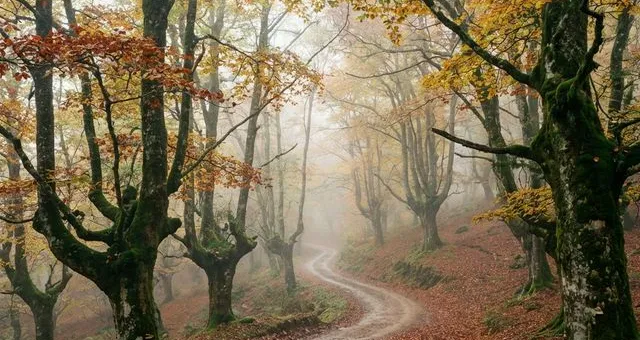
Autumn is the season of the Asturian forests
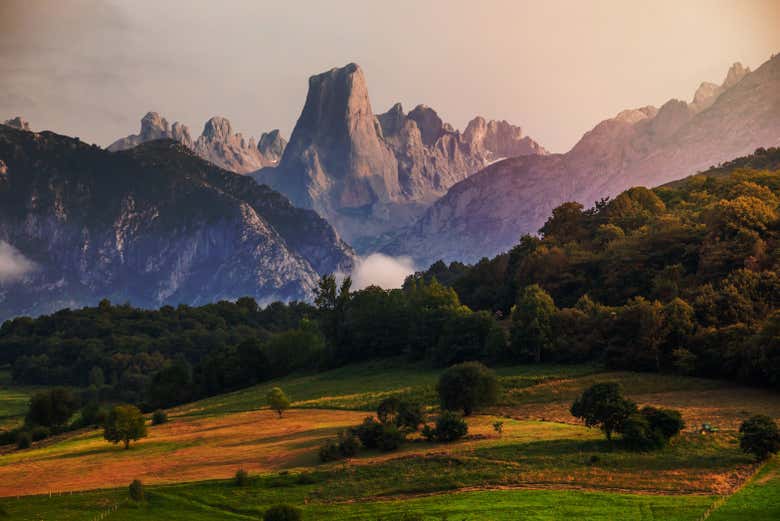
For a few weeks each year, the natural parks of Asturias change their skin. Beech trees turn from green to yellow and then copper, oaks take on ochre tones, chestnut trees cover the ground with spiky husks, and the mist lingers between the trunks until mid-morning. It is the time when a walk in the woods becomes the best plan in the region.
Autumn has other advantages too: trails are quieter than in summer, rivers and waterfalls regain their flow with the first rains and, in September and October, the mountain valleys fill with the sound of the deer rut.
This guide covers when to go, six forest hikes spread across the natural parks and the practical tips that make the difference at this time of year.
When to go: the colour calendar
There is no fixed date. The colour depends on altitude, the first frosts and, above all, storms: a couple of days of north-westerly wind can strip a beech forest that was at its best the week before.
As a general guide:
- Late September and early October: the highest beech forests, near the mountain passes, start to turn yellow.
- Second half of October and first half of November: usually the peak in the mid-altitude beech forests, which is where almost all the hikes in this guide go.
- November: the oak and chestnut woods in the lower valleys hold their colour longer and take over.
The best advice is to look at recent photos of the area before you set off and pick a day of settled weather after several days without storms. If you want to know more about how the beech changes through the year, read the beech forests of Asturias.
Six autumn hikes in the natural parks
1. Peloño Forest (Ponga)
12 km · 4 h return · easy
Peloño is the quintessential autumn forest in Asturias: a vast beech wood, protected as a partial nature reserve, crossed by a wide and comfortable track. The hike starts at the Les Bedules viewpoint, reached by road from San Juan de Beleño, passes Collada Granceno and ends at the Roblón de Bustiello, a monumental oak in the middle of the beech forest. You return the same way.
It is the easiest hike on the list and the busiest at weekends in October: go on a weekday or start early if you can.
2. Montegrande beech forest and Xiblu waterfall (Las Ubiñas-La Mesa)
8.5 km · 3 h return · easy
In Teverga, the forest track from the Braña La Puerca car park, near Páramo, runs almost flat through the Montegrande beech forest. After crossing the river, a signposted path heads into the dense woods to the foot of the Xiblu waterfalls.
It combines two of autumn’s great draws: the colour of the beech forest and a waterfall that, after the first rains, flows far more strongly than in summer.
👉 See the Xiblu Waterfall route
3. Tabayón del Mongayu waterfall (Redes)
11.7 km · 4 h loop · moderate
From the village of Tarna, in Caso, the trail climbs gently to the Llanu’l Toru, with its centuries-old oaks, then enters the Monte Saperu beech forest and reaches the base of the Tabayón del Mongayu, a waterfall of around 60 metres. The return is a loop through the Mongallu and La Ablanosa valleys, with about 575 m of climbing in total.
In autumn the two forests meet here: first the ochre of the oaks, then the copper of the beeches.
👉 See the Tabayón del Mongayu route
4. Moal Forest, the gateway to Muniellos (Fuentes del Narcea)
9 km · 3 h 30 min loop · easy to moderate
The Muniellos forest is the largest oak forest in Spain, but its interior is a strict nature reserve: only 20 people a day may enter, with a free permit requested through the regional government’s online portal. Applications for each year open on 15 December, and autumn dates are in high demand.
Without a permit, the loop from the village of Moal is the best alternative. It crosses the Muniellos river, passes traditional cortinos (old stone beehive enclosures) and climbs to the Montecín viewpoint, which looks into the reserve without needing authorisation.
👉 See the Moal Forest route · More about the Muniellos forest
5. Lindes beech forest (Las Ubiñas-La Mesa)
10 km · 4 h loop · moderate
For those looking for something more demanding and less crowded. The hike starts in the village of Lindes, in Quirós, enters the Vallinona beech forest and passes the Manín pasture, with views of Peña Rueda, before looping back to the village. There are 600 metres of ascent, so a reasonable level of fitness helps.
👉 See the Lindes Beech Forest route
6. Vega de Pociellu through the Fabucao beech forest (Redes)
13 km · 4 h 30 min return · moderate
From the Tarna pass road, the trail crosses the young Nalón river, passes the La Ablanosa pasture and climbs through the extensive Fabucao beech forest until it comes out at the Vega de Pociellu, one of the widest and most remote mountain pastures in Redes.
If you go in late September or October, listen out: Redes is one of the best places in Asturias to hear the deer rut at dawn and dusk.
👉 See the Vega de Pociellu route
Tips for hiking in autumn
- Plan around daylight. In early October the sun sets in Oviedo at around 20:00, but the clocks go back on 25 October and from then on it gets dark at around 18:30, and around 18:00 by mid-November. In narrow valleys the light goes earlier. Start early and leave time for the return.
- Watch the leaves. The carpet of leaves is beautiful but hides stones, roots and mud. Wear boots with a good grip and take trekking poles if you have them.
- Layers and a waterproof. A misty morning can turn into a sunny midday or into rain. Check the AEMET forecast the day before.
- Respect hunting drives. Autumn is wild boar hunting season. If you see signs for a drive in progress (batida), stay on the marked path, make some noise as you walk and wear something brightly coloured if you can.
- Avoid Spanish long weekends if possible. Peloño, Xiblu and Tabayón get crowded on the mid-October and early-November bank holiday weekends. On weekdays you will have the forests almost to yourself.
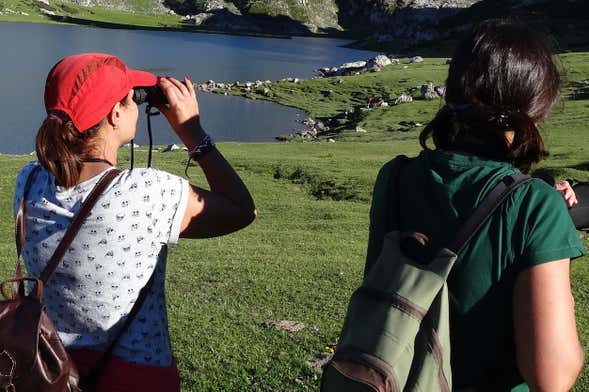
- Keep quiet and keep your distance from wildlife. During the rut, deer are very active. Watch them from afar and stay on the trails.
Where to stay
To do several of these hikes over a weekend, it is easiest to stay nearby:
- Ponga (Peloño): places to stay in Ponga
- Redes (Tabayón del Mongayu and Vega de Pociellu): places to stay in Redes
- Teverga and Quirós (Xiblu and Lindes): places to stay in Las Ubiñas-La Mesa
- Cangas del Narcea (Moal and Muniellos): places to stay in Fuentes del Narcea
If you are going on a bank holiday weekend, book ahead: those are the busiest dates of the autumn.